


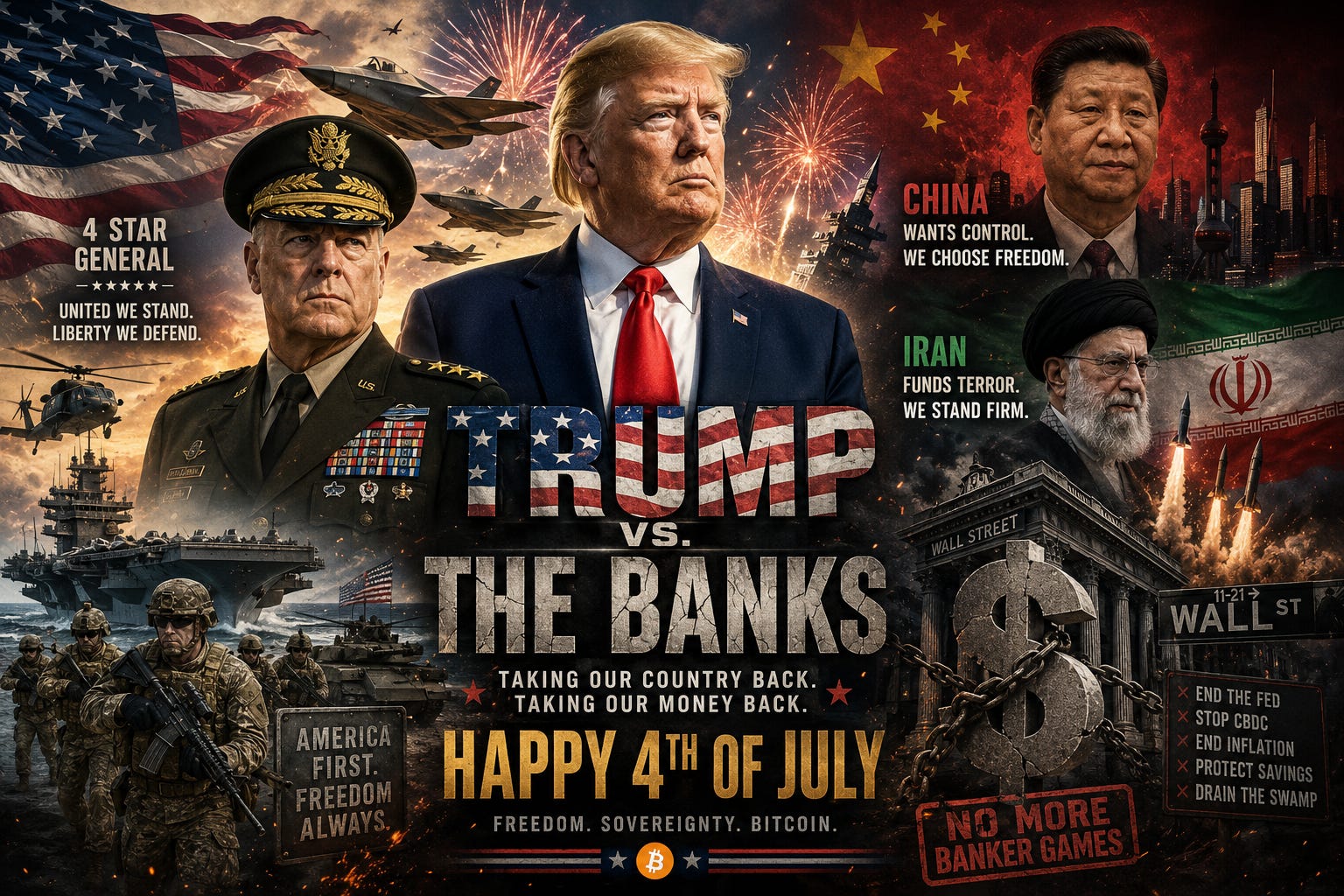
The Moment Nobody Saw Coming
On April 21, 2026, Admiral Samuel Paparo — a four-star US Navy admiral and commander of US Indo-Pacific Command — sat before the Senate Armed Services Committee and said something nobody expected.
The US military is running a live node on the Bitcoin network.
Not studying it from a distance. Not reviewing academic papers about it. Running a node. Participating directly in the peer-to-peer network. Conducting operational tests to secure and protect military communications using the Bitcoin protocol.
He told Congress the military has a node on the Bitcoin network right now, running operational tests to secure and protect networks, describing Bitcoin as showing incredible potential as a computer science tool.
Then he said something even more striking. He called Bitcoin a tool for American power projection. Anything that supports all instruments of national power for the United States of America, he said, is to the good.
A sitting US military commander, in front of Congress, describing Bitcoin as an instrument of national power. Not a speculative asset. Not a payment method. A strategic tool in the competition with China.
Why a Bitcoin Node, Specifically?
To understand why this matters, it helps to know what a Bitcoin node actually does.
When you run a Bitcoin node, you download and independently verify the entire history of every transaction ever made on the network. You become your own source of truth. You do not trust anyone else’s version of events — you check it yourself. That is the zero-trust architecture Paparo was referring to.
In military communications, trust is an existential problem. Traditional systems rely on centralised authorities — trusted servers, certificate authorities, central verification points — all of which create single points of failure. A sophisticated adversary who compromises one of those points can manipulate everything downstream.
Bitcoin’s architecture solves this differently. There is no central point to compromise. There are tens of thousands of nodes distributed around the world, each independently verifying the same truth. To alter it, you would need to simultaneously control 51% of all the computing power in the network — a feat requiring more energy than most countries use annually.
That is what Paparo means by proof-of-work imposing cost. Attack attempts are not just technically difficult. They are prohibitively expensive in the physical world. That property is genuinely useful for military communications and network security.
The China Dimension — and the Iranian Twist
The hearing was not happening in a vacuum. Senator Tommy Tuberville asked Paparo directly: could US leadership in Bitcoin give America an edge against China in the Indo-Pacific?
Paparo did not deflect. He said Bitcoin supports all instruments of American national power and referenced dollar dominance approvingly.
China has been building its own digital currency — the digital yuan — for years. The design is the polar opposite of Bitcoin: centralised, government-controlled, every transaction visible to the state. Beijing has been running cross-border payment projects specifically designed to settle international trade without touching the US dollar or the SWIFT system. Several nations are participating. The dollar’s grip on global trade is the target.
And here is the extraordinary detail that nobody in mainstream media is connecting. Iran — the country whose conflict with the US and Israel has been driving oil prices up 60% and causing the inflation that has made the Fed’s life impossible — is now demanding Bitcoin for safe passage through the Strait of Hormuz.
The same strait. The same oil shock. The same inflation driving up energy bills everywhere. And Iran is pricing access to it in Bitcoin, not dollars, not yuan.
A US military commander is running a Bitcoin node. Iran is accepting Bitcoin for Hormuz toll payments. Taiwan is reportedly considering Bitcoin as a reserve asset. The geopolitics of Bitcoin have changed completely in the space of months.
From Fraud to National Security Asset
It is worth taking a moment to appreciate how far this has come.
In 2017, Jamie Dimon called Bitcoin a fraud and threatened to fire any trader caught buying it. The SEC spent a decade suing crypto companies rather than writing rules for them. The US government position as recently as 2022 was essentially: dangerous speculative bubble, regulate it out of existence.
In April 2026, a four-star admiral tells Congress it is a tool of national power. SEC Chair Paul Atkins became the first sitting US securities regulator to address the annual Bitcoin conference, announcing Project Crypto, a Commission-wide initiative to modernise rules for digital assets. The Strategic Bitcoin Reserve is executive policy. JPMorgan customers can buy Bitcoin through the app.
The establishment did not just accept Bitcoin. It recruited it.
Trump, the Banks, and a Deadline
While Paparo was testifying in Washington, something equally significant was happening in Palm Beach.
On April 25, President Trump addressed a private gathering at Mar-a-Lago that included Tether CEO Paolo Ardoino, ARK Invest’s Cathie Wood, billionaire Tim Draper, and several hundred of the top holders of his $TRUMP memecoin. He used the platform to deliver a direct warning to the banking lobby.
He said he would not allow banks to block the Clarity Act. He pledged to sign it immediately if Congress sends it to his desk. He described crypto as having become mainstream and framed the Clarity Act as essential for keeping the industry onshore. Banks need to make a deal, he said. They do not get to veto this.
This matters because the banking lobby has been the Clarity Act’s main obstacle for months. Banks have been fighting the stablecoin yield provisions — the rules that would allow regulated platforms to offer returns on dollar stablecoins. Their stated concern: it would pull deposits out of the banking system. Their real concern: competition from a product paying 10-12% when their savings accounts pay 0.07%.
The Clarity Act missed its April Senate Banking Committee markup deadline. The window is now May — specifically the week of May 11, the first possible date after the Senate returns from recess. Senator Moreno has said it must clear Congress by end of May or risk waiting until 2030. Lummis confirmed at the Bitcoin 2026 conference that the markup will happen in May. Moreno has gone further, saying he expects Trump to sign it before July 4th.
Prediction market odds have recovered to around 60-69% following the stablecoin yield compromise and Trump’s direct intervention. Galaxy Research still puts it closer to 50-50. The honest answer: the next three weeks will decide it.
What It All Means
In the space of a few days in late April 2026, Bitcoin moved from being a financial asset debated in Senate committee rooms to being described as an instrument of military power, a tool of dollar dominance, and a direct challenge to Chinese geopolitical ambitions.
None of that changes what Bitcoin actually is. The protocol has not changed. The 21 million coin supply cap has not changed. The decentralised architecture that makes it resistant to control by any single party — including the US military — has not changed. One government node out of 15,000 to 20,000 publicly reachable nodes does not give anyone control of anything.
But the way the most powerful institutions in the world are talking about Bitcoin has changed completely. And when a four-star admiral tells the US Senate that Bitcoin is a tool of national power in the same week the President is threatening banks to get out of its way, that is not a moment to scroll past.
Jamie Dimon called it a fraud in 2017. His customers can buy it through his app today. The US military is running a node on the network. Iran is using it to charge tolls on the world’s most strategically important waterway.
The fraud is doing rather well.
The Clarity Act markup is expected in the week of May 11. Full breakdown as soon as it happens. Make sure you’re subscribed so you get it the moment it lands.